Home Blog Page 4

Track Spending to find Savings

6

Savings = Income – Expenses. It is the time to talk about the Expenses part of the equation. Once you understand your expenses, you can control them. Understanding what you spend on is the key to increase your savings and in this blog post I will share with you how we do that.

“They say money talks, but all mine ever says is ‘good-bye sucker.” Jill Shalvis

If you relate to this quote by Jill Shalvis, keep reading:-)

What I use to track our spending

I use a great app call Spendee to track my daily spending. It is a free mobile app and I am using it for 3 years now. I can access all my past spending in different permutation and combination, which is a great help to track our family’s spending and inflation trends.

It is a easy to use mobile app, it takes only few seconds to add a transaction. See screenshots below for how to use it. You can change the currency to INR, once you download the app.
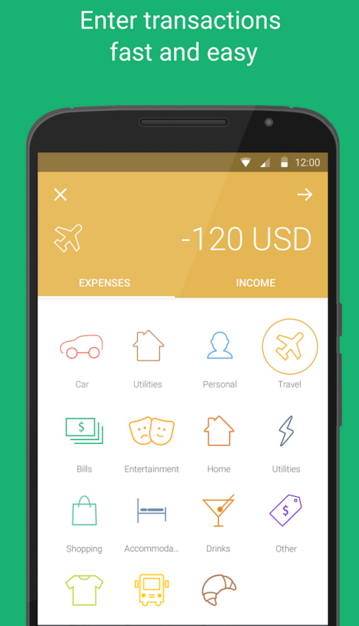
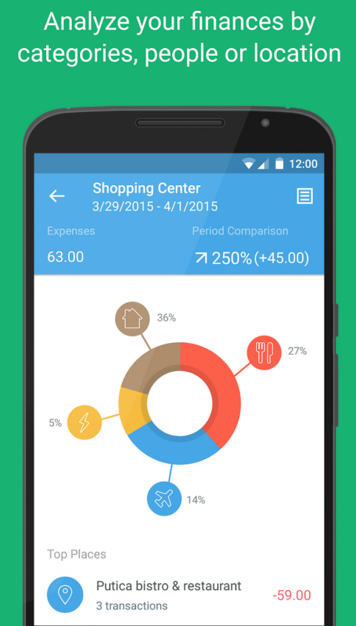
image
image

How I use the Spendee to keep tab on our spending

  • Whenever I buy something I immediately open the app and add the expense under the category
  • For known expenses like rent, phone bill etc, I add a recurring expense each month
  • For annual expenses where I pay upfront like health insurance, I break it down into monthly recurring expense. This is so I know my monthly budget. Beauty is : On Day 1 of every month, all these recurring expenses are shown immediately on the app. So I know how much money I’m allowed to spend for the rest of the month .
  • At the end of the month I check if I’m under-budget for the month. If not I check each expense category to figure out where I went over.
  • Additionally, we also analyze whether we can save money in each category. We recently discovered that we would save Rs.1000/month by upgrading to a different internet plan since we were paying extra charges whenever we went over our current plan’s limits.

Pros of using Spendee:

  • Free
  • Multiple family member can access it from their phones to input their spending
  • Does the job
  • Can set currency to Indian Rupee.
  • Has more advanced features if you need them.

Cons of using Spandee:

  • Manual entry : Minimum 3-4 of clicks to add a single expense. An app idea I just had : option to just enter the expense amount and app uses location info from phone to figure out if it was a restaurant, market etc 🙂
  • Needs a Budget limit function for each category and total budget per month. That way I can know in real-time if I’m under-budget for a particular category and for the month.

****Update-5-July-2018 *****

Couple of readers in comments have recommended another APP called Walnut which allows you to add budget. I have personally not used it so far, may give it a try in future. But changing app is a bit of a work, as my old data would stay on spendee.

If you are not using any app yet. I would recommend you to do your research and compare all new/old apps available and go with the one which solves all you problems because it is difficult to migrate later as your old data may/may not be transferable to the new app.

Next to Read:

Hacking Luxury on Budget

Early retirement in India – Ultimate Guide

Top 5 Reasons to be Financially Independent and Retire Early

How to save money on domestic flights in India

Today we just saved almost the entire cost of a Delhi to Chennai flight ticket using Jet Airways Miles I had accumulated since 2012.  That was what prompted me to write this post.

Airline miles aka Frequent Flyer/Loyalty program:

Low-cost budget carriers don’t offer this  but full-service carriers like Jet Airways, Vistara do.  Even Air India has one.

The way it works is the more you fly a particular airline the more miles you earn that you can redeem later for a free ticket! You need to sign up for their frequent flyer program and provide your frequent flyer number when you buy tickets so they can credit you with miles.

Caveat 1:  If you don’t use airlines’ website and instead use cleartrip, makemytrip etc you may not be shown the option to enter your frequent flyer number while booking tickets. Then you will have to remember to tell the airline’s agent during check-in so they credit you the miles or you can even call the airlines customer support .

Caveat 2: After you rack up miles, the airlines can change up how many miles you need to fly to a destination. Call it “exchange-rate risk” 🙂

Link for Jet Airways JPMiles program

Link for Vistara KrisFlyer program

Link for Air India Flying Returns program

Travel Credit Cards

If you are big on travel then you should get a credit card that rewards you in travel miles for spending money on the card.

Here are some cards for you: (I’ll keep this section updated with the best value for money travel credit cards)

Amex + MakeMyTrip card

Citibank Premier Miles card

HSBC + MakeMyTrip card

All of HDFCs travel credit cards

Travel Website Promotions:

Download the apps of these websites to get notified of offers run by them or the airlines.

Cleartrip Offers

MakeMyTrip Offers

GoIbibo is running a referral offer where if you refer a friend you get Rs.200 credit and your friend gets Rs.1000 credit. Personally I found that it was implemented pretty poorly. They let me use only Rs.500 credit out towards each ticket while charging Rs.400/passenger as convenience fee and not allowing me to use the entire Rs.1000 credit I had earned. On top of that, my credit was reset to zero when I tried to check the final price without buying. Turns out the two times I checked the price reduced my credit by Rs.500 each time. Hey! if it works for you please use my referral code 🙂

GoIbibo app referral code: BB9CDCE

Travel Deals on FreeCharge.in

When you recharge your prepaid phone, FreeCharge gives you travel deals and coupons from travel websites.

https://www.freecharge.in/#!/coupons

image


Miscellaneous tips:

+ Let out your own apartment on Airbnb and make some extra cash towards the travel budget

+ Use the Indian railways. Go IRCTC!

+ While traveling try to stay in an Airbnb apartment with a kitchen so you can cook meals and cut some eating-out costs from the trip

How to Pay off your Student Loan in the Shortest Time possible

5

You can use these tips for any loan but are most effective for student loans since they are are not as big as home loans but are burdensome nonetheless.

If you answer YES to even one of the below questions you can read on for some ideas to cut down your debt drastically:

  • Your loan is preventing you from fulfilling your true potential through creative pursuits?
  • If you lose your job today you cannot afford to pay your monthly EMI installment without borrowing from anyone or liquidating assets?
  • You have expensive life events coming up in the near future?  Ex: MBA, parents’ health, marriage, starting a business, house, child etc
  • You are not comfortable paying student loan debt every month for the next 10 years while also handling such expensive life events?
  • You understand that paying a lower EMI each month increases your overall debt over time?

STRATEGY #0 : Resolve to pay off your loan in the shortest time possible

Yes. This can be done.  I’ve done it so can you. Ordinary people with ordinary jobs have done it before you. The ideas below will seem drastic but What you need is not a high income but a minor change in mindset. Just follow the aggressive strategies below which will have the surprise benefit of netting you higher savings/month once your loan is paid off

image

STRATEGY #1: Lower your interest rate: Take a loan from your Parents and pay them back (without fail!)

Most likely your parents co-signed for your education loan so they are already on the hook if you don’t pay back the bank. The current education loan interest rate is 13.5% while the interest income your parents get from a bank fixed deposit is 8.5% :  a difference of 5%. So why not take a loan from your parents and pay them a 0.5% higher interest rate and lower your monthly EMI by a few thousand rupees. Win-Win for everyone assuming of-course you pay them back on-time every month without fail.

CAVEAT 1: I would not advise getting a loan from any other family member as it creates a debt of gratitude you cannot shake off for the rest of your life. You are indebted to your parents anyway 🙂

CAVEAT 2: Some banks might charge a pre-payment penalty. Use this loan prepayment calculator to figure out how much you would save in paying extra interest if you prepaid.

STRATEGY #2: Pay double your EMI every month & more

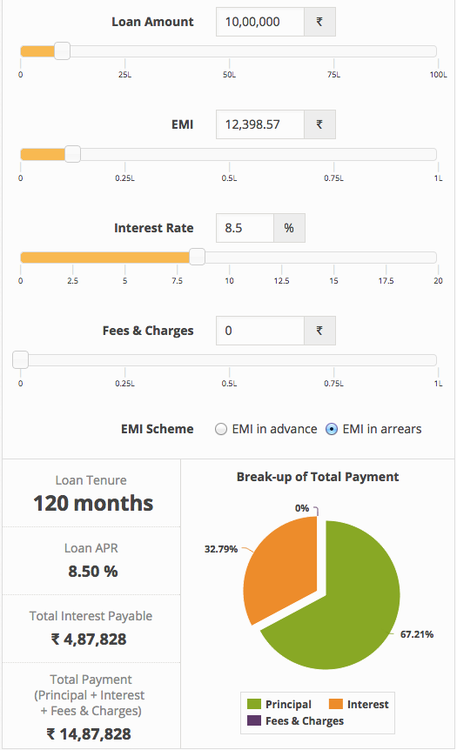
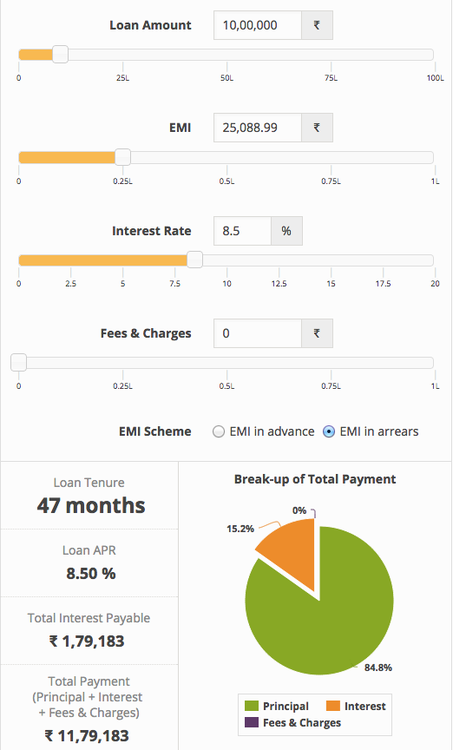
This is the only guaranteed way to get out of debt fast. Even if you cannot ask your parents for help like in #1 above, this is completely within your control. Use this Loan Tenure Calculator to see for yourself how paying double the EMI brings down your loan repayment period drastically.

NORMAL EMI: Rs.10 lacs loan at 8.5% interest takes 10 years to pay off

image


DOUBLE THE EMI: Loan repayment period reduces from 10 years to under 4 years!!!!

image

Where do I find money to pay more you ask? Well, first set aside double the EMI and live on only the rest of your take-home pay. That’s a bitter pill to swallow but read on for ways to help you put down double the EMI.

Pro-tip:  Also plough your bonus, salary raise, birthday gifts, income tax refund etc all towards your loan payments dramatically reducing the loan repayment period.

CAVEAT : Some banks might charge a pre-payment penalty or paying more in EMI.

STRATEGY #3: Increase your surplus: Stop investing while you have debt

If you have debt at 13.5% then investing in any product that does not give a return more than 13.5% does not make sense.  Till you pay off your loan, just invest in your employer’s mandatory EPF contribution because you get free matching contribution from your employer and maintain 6-12 months of emergency expenses should you lose your job

STRATEGY #4 : Increase your salary: Change jobs

Changing jobs is the #1 pro-active way to get a salary increase.  Even if you don’t plan to change jobs, testing the job market will inform you what skills are valuable to keep yourself up-to-date should you lose your job and how much raise to ask for at your current job. Read this : Salary Negotiation: Make More Money, Be More Valued.

Pro-tip: If your job allows an overseas stint then push your boss hard to send you abroad so you can earn in dollars/euros and crush your debt in under a year.

STRATEGY #5: Increase your savings: Adopt a frugal lifestyle

I don’t want to sound preachy here but live lean & mean till you pay off your loan. Start by trimming the top 3 recurring costs in your monthly budget & plough the savings into you-know-where by now 🙂

  1. Rent (Makaan) : share a house with room-mates or stay with parents (if possible).  Save money & time on commute by living close to your work
  2. Food (Roti) : Learn to cook simple items that you like & then pack them for lunch. Eating out is a real drain on savings. Online recipes are available galore.
  3. Clothes (Kapda) : Just get a few repeatable but smart formals for work and go with t-shirts/jeans till you pay off your loan

STRATEGY #6: Be smart: Take advantage of government & bank schemes

+ Women get a 0.5% interest rate concession. If you did not get this concession ask your loan-providing bank

+ Some banks offer a 1% interest rate concession if you pay interest promptly even when you were studying a.k.a moratorium period. So if you paid interest during  college then check with your loan-providing bank to ask for the concession. See language from SBI  bank

  • 1% concession for full tenure of the loan, if interest is serviced promptly as and when applied during the moratorium period, including course duration.

+ Check if you are eligible for the Interest Subsidy scheme for low-income households where the government pays interest while you are studying. UPDATE:  The option to file claims for past years seems to be closed now even though the scheme is operational for students. Online discussion

+ While filing taxes don’t forget to claim tax deduction on the interest paid. Less taxes you pay the more money on hand to pay more EMI. You can use ClearTax to file taxes online in 15 minutes

+ Take a term life insurance on yourself benefiting parents/spouse to protect them from your education loan debt after you. Twin benefits to this move: the insurance premium will not change in your lifetime AND is tax-deductible

LIKE THIS POST?

SHARE IT WITH FRIENDS WHO HAVE A EDUCATION LOAN

Reduce your mobile phone bill : Save money on data usage

2

If you are on a mobile data plan with say a limit of 1GB/month or want to save on home Wi-Fi because of monthly quotas (ex: BSNL) then here are some tips guaranteed to save you data usage without taking the fun out. The tips here apply mostly to Android phones but iPhone users can also use most of them

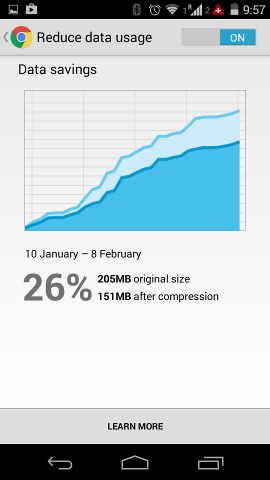
Tip #1: Enable “Reduce Data Usage” on Google Chrome.

This will compress web pages you browse so it consumes less data. I experienced 25% savings last month.

Chrome browser > Settings (under the 3 vertical dots near address bar) > Reduce Data Usage

image

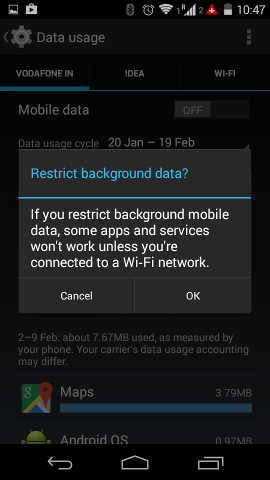
Tip #2:  Restrict background data

Some apps like to keep pushing data to your phone to announce new features, product upgrades etc. Restricting this means you will get them when you are next on Wi-Fi

Settings > Data Usage > Restrict background data (under 3 vertical dots on right side of screen)

Note: I’ve noticed that a phone restart resets this setting back.

image

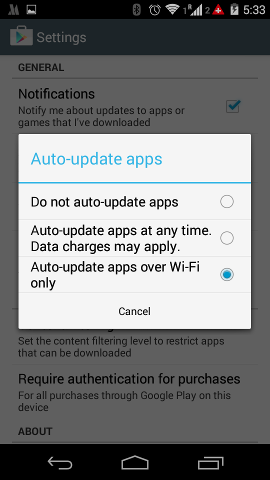
Tip #3: App Store: Update apps only on wifi

image

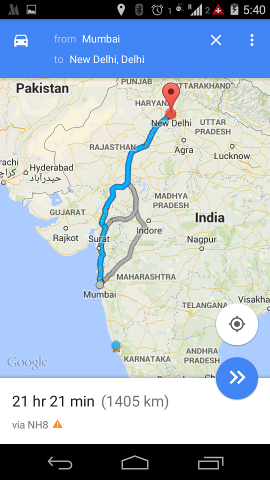
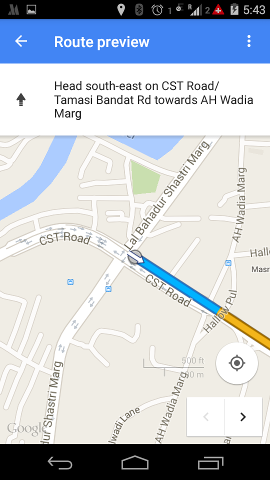
Tip #4: Use Google Maps without data

Whenever I have to drive someplace needing directions, I load it up on Google Maps on Wi-Fi at home. Then when I’m driving MAGIC of MAGIC: Google Maps will cache that route map so you don’t need mobile data even for “turn-by-turn” directions!

image
image

Tip #5: Stream songs and videos on low quality

If you listen to Gaana, Spotify, Youtube etc go to the settings page and change the streaming quality to low. 99% of the time you will not notice the difference in song quality.

image

Tip #6: Save news articles on Wi-Fi for reading offline

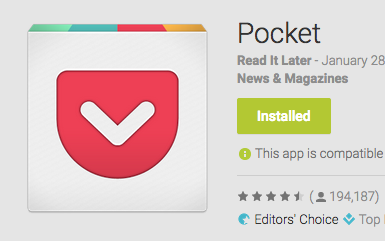
I have the “Pocket” app on my phone. Using the “Save to Pocket” Google Chrome extension, I save interesting articles to Pocket over Wi-Fi. In the background Pocket will sync it with the app on my phone.

So when I’m on the metro or waiting I don’t need data to read the articles plus the app neatly formats the article for readability on mobile phone.

image
image

Bonus Tip:  Turn off mobile data when you are not on a home or work Wi-Fi

A Man With Savings :A bank ad from 1963 – timeless!

4

1 minute read

Your savings, believe it or not, affect the way you stand, the way you walk, the tone of your voice. In short, your physical well-being and self-confidence. A man without savings is always running. He must. He must take the first job offered, or nearly so. He sits nervously on life’s chairs because any small emergency throws him into the hands of others.

Without savings, a man must be too grateful. Gratitude is a fine thing in its place. But a constant state of gratitude is a horrible place in which to live. A manwith savings can walk tall. He may appraise opportunities in a relaxed way, have time for judicious estimates and not be rushed by economic necessity.

A man with savings can afford to resign from his job if his principles so dictate. And for this reason he’ll never need to do so. A man who can afford to quit is much more useful to his company, and therefore more readily promoted. He can afford to give his company the benefit of his most candid judgments.

A man with savings can afford the wonderful privilege of being generous in family or neighborhood emergencies. He can take the level stare of any man … friend, stranger or enemy. That ability shapes his personality and character.

The ability to save has nothing to do with the size of income. Many high-income people spend it all. They are on a treadmill, darting through life like minnows.

If you don’t need money for college, a home or retirement, then save for self-confidence. The state of your savings does have a lot to do with how tall you walk.

image
image